

The hidden power of status : Why we care more about recognition than money
Why most organizations reward the wrong behaviors — and how a simple piece of chalk can change everything

I've worked with teams of all sizes over the years — from fledgling startups to Fortune 500 behemoths, and I've noticed an interesting pattern that stays remarkably consistent.
When team members receive public recognition for their work, they consistently outperform those who receive private rewards, even financial ones. Someone praised in an all-hands meeting will typically show more motivation than a colleague who received a spot bonus that nobody knows about. This pattern repeats itself across industries, company sizes, and cultures.

Like it or not, humans care about status. When you have a higher status in an organization, your ideas gain traction more easily. You get invited to the important meetings. People actually read your emails. But here's the thing: many organizations unintentionally reward the wrong status markers.
Praise from others boosts our self-esteem and social standing, even if we know we didn’t really earn it. That’s the power of publicapproval.
The Status Paradox in Organizations
I've spent years observing how people behave in companies, and something's become painfully clear: we place enormous value on a person's influence based on their designation, status, or position. That's just how our human minds work.
In many companies, status gets attached to things that don't necessarily drive the outcomes the business actually needs:
Growing a bigger team
Managing a larger budget
Having the most direct reports
Looking busy with "important work"
Focusing on optics over results
These status markers often lead to bloated teams, slower decisions, and completely misaligned incentives. I mean, have you ever noticed how people with "VP" in their title suddenly get listened to, even when they're saying the exact same thing they said as a Director?
But personally, I care more about outcomes like:
Speed of execution
Putting creators first
Working effectively across teams
Achieving measurable results
Building systems and repeatable processes
The challenge for any leader is creating an environment where the actions that earn status are the same actions that drive the outcomes you actually want.
The Charles Schwab Chalk Story
This reminds me of how Charles Schwab (the steel magnate, not the investment guy) used status to drive performance in the early 1900s.
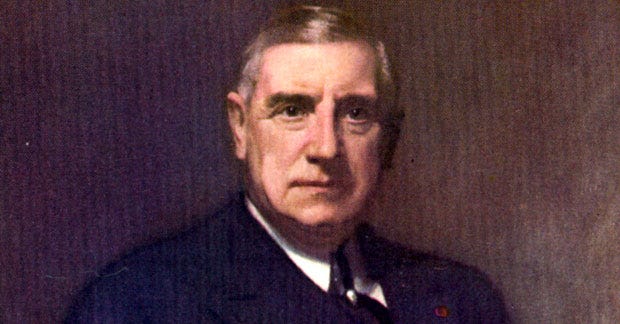
Schwab was visiting one of his underperforming steel mills. The manager was frustrated: "I've coaxed the men, pushed them, threatened them with being fired. Nothing works."
As the day shift was ending, Schwab asked one of the workers how many heats (units of steel) they'd completed that day.
"Six," the worker replied.
Without saying a word, Schwab took a piece of chalk, wrote a big "6" on the floor, and then walked away.
When the night shift arrived, they asked what the number meant. The day shift explained that the boss had been there and written down their output.
The next morning, the day shift found the "6" had been erased and replaced with a "7". Not to be outdone, they worked extra hard and left behind a big "10" at the end of their shift.
This simple competition continued until this previously struggling mill became the highest-producing facility in the company.
Schwab didn't create a complex bonus system or threaten people. He just made performance visible and gave people something to strive for. He tapped into our natural desire for status and recognition.
If you are interested in knowing this chalk theory, check this out.
Why Recognition Works Better Than Money (Usually)
Research confirms what Schwab understood: 67% of employees rate praise and recognition as more motivating than financial incentives. People receiving regular recognition are 5x more likely to feel valued and 6x more likely to invest in their work.
For years, I've asked teammates what motivates them, expecting to hear about bonuses or promotions. Instead, I consistently hear:
"I want my work to matter"
"I want to be seen for my contributions"
"I want to be known for being good at what I do"
These are all status markers. They're about how we're perceived by others in our community.
Redesigning Your Status Systems
If you're trying to drive behavior in your organization, think about how you might use status as a motivator:
What behaviors currently earn respect in your company?
Do they align with what actually drives results?
How visible are the achievements you value most?
Who gets attention in meetings, and why?
Making achievement visible, like Schwab's chalk mark, is often more powerful than any speech or incentive plan.
Here's what I've been experimenting with:
Making performance visible through public dashboards
Celebrating behaviors aligned with outcomes, not just outcomes themselves
Creating badges for achievements that matter
Giving people opportunities to present work to leadership
Associating high status with coaching others, not just personal success
Status will always matter in human organizations. The trick is not fighting against it, it's harnessing it by designing systems where the path to status aligns with the path to results.
Sometimes the most powerful management tools aren't complex incentive schemes or formal recognition programs, but simply a piece of chalk that makes performance visible.
What behaviors earn respect in your company right now? Do they align with what actually drives results? I'd love to hear your thoughts.